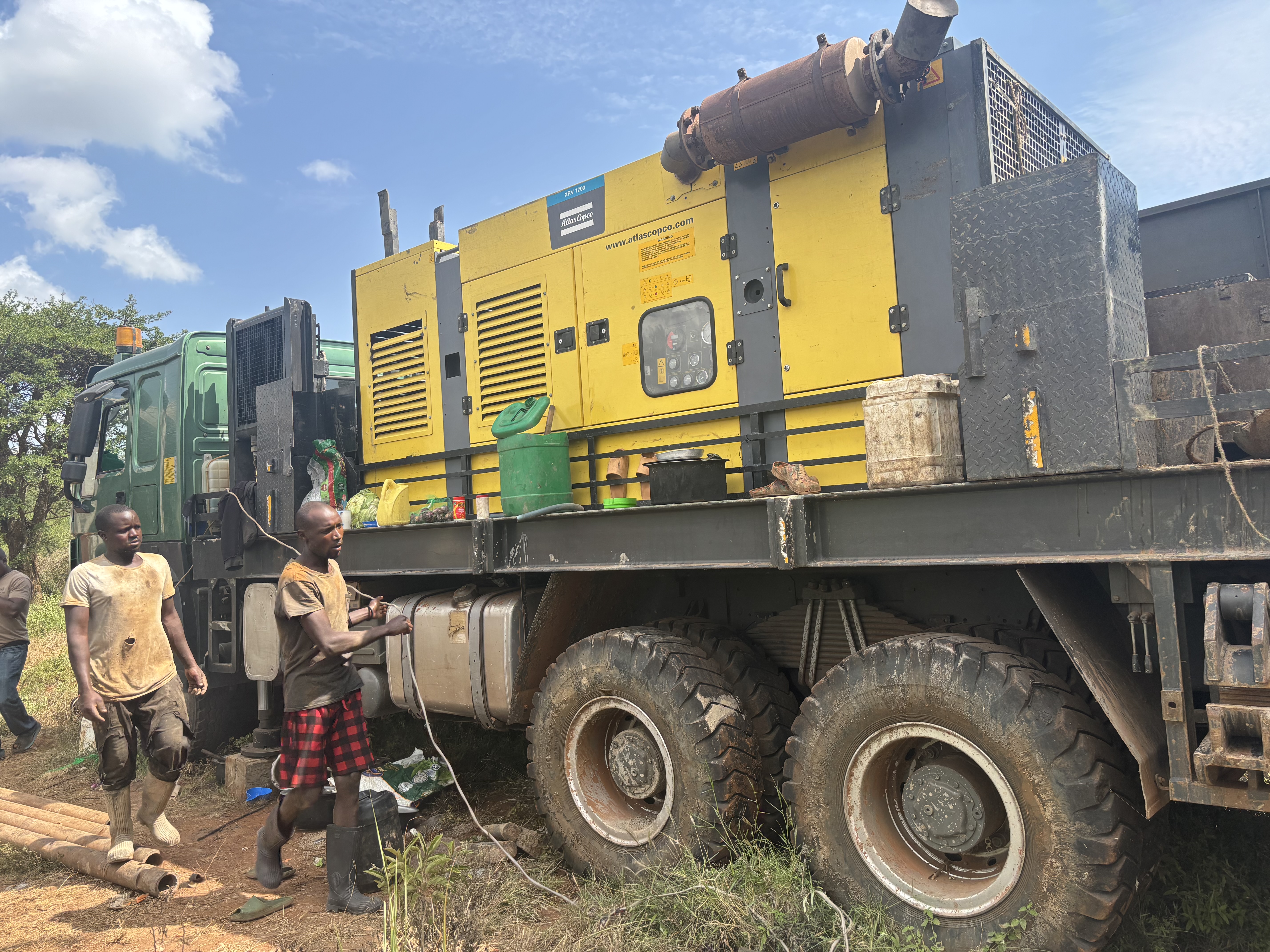
A borehole is one of the most critical long-term investments you can make. Quality drilling determines everything.
Borehole drilling is far more than simply drilling a hole and installing a pump. It's a highly technical process that requires geological knowledge, precise engineering, proper equipment, and strict adherence to international standards. At Kisima Well Drillers, we follow hydrogeological recommendations and internationally accepted drilling protocols to construct boreholes capable of serving communities, farms, businesses, and institutions for more than a century when properly maintained.
Our drilling methodology prioritizes aquifer protection, structural stability, water quality preservation, and long-term system reliability — never shortcuts. Every borehole we drill is an investment in your water security.
Engineered for 100+ Years of Service
A borehole's lifespan depends on correct drilling diameter, casing quality, proper aquifer protection, and correct sealing. We engineer each borehole to withstand geological stress, contamination risks, temperature fluctuations, and long-term pumping demands.
- Structural Integrity: Proper casing prevents collapse for over 100 years
- Contamination Protection: Multiple sealing layers block surface pollution
- Water Quality Preservation: Screened casings and gravel packing ensure clean water
- Sustainable Yield: Correct depth ensures long-term aquifer recharge
- Operational Reliability: Precise engineering minimizes maintenance needs
Our 7-Step Professional Drilling Process
Each step is critical to creating a durable, high-yield, and safe borehole.
Site Mobilization
Rig deployment, equipment staging, and precise site alignment based on hydrogeological recommendations.
Initial Drilling
8-inch diameter borehole drilled through overburden materials until competent rock is reached.
Surface Casing
8.5-inch steel casing installed to bedrock depth for structural protection and contamination blocking.
Deep Drilling
Drilling continues within rock formation to survey-recommended depth for aquifer interception.
Casing Installation
Screened and full casings installed from bottom upward, protecting productive aquifers and sealed zones.
Gravel Packing
Graded gravel placed around screens; borehole flushed to remove drilling mud and ensure water clarity.
Sealing & Testing
Cement grouting seals upper sections; borehole stabilizes before test pumping determines yield and recovery.
Detailed Drilling Methodology
Step 1: Site Mobilization & Preparation
After approval of the hydrogeological survey and obtaining necessary permits, we mobilize the drilling rig, casing materials, gravel, cement, and support equipment to site. This stage is critical for success.
Proper setup includes accurate site marking based on survey coordinates, safety perimeter establishment, equipment staging, and environmental protection measures. The rig is positioned precisely to ensure vertical drilling alignment — even slight angles compromise borehole integrity.
- ✓ Coordinate Verification: Site located exactly per survey recommendations
- ✓ Rig Setup: Vertical alignment checked and rechecked for accuracy
- ✓ Safety Protocol: Safety perimeters and barriers established
- ✓ Environmental Protection: Drilling mud containment and waste management setup
Step 2: Initial Drilling to Rock Depth
We drill an 8-inch diameter borehole through all loose overburden materials — soil, clay, sand, weathered rock, and other unstable upper-layer materials. These materials are too weak to support long-term structural stability and require immediate protection.
Drilling continues until competent bedrock is reached — solid, stable rock capable of supporting the borehole structure. The depth to rock varies by location: Nairobi averages 20–40 meters, while some arid regions reach 80+ meters.
Why 8-inch diameter? This size provides optimal strength-to-cost ratio, allowing for proper casing installation while minimizing drilling time and cost.
Step 3: Surface Casing Installation
Once competent rock is reached, an 8.5-inch steel surface casing is installed from ground level down to rock depth. This critical component protects the borehole and ensures decades of structural integrity.
Surface Casing Protects Against:
- ✓ Collapse Risk: Prevents loose topsoil and clay from collapsing into the borehole
- ✓ Surface Water: Blocks rainwater, floodwater, and runoff infiltration
- ✓ Contamination: Prevents pollution from latrines, septic tanks, and surface waste
- ✓ Aquifer Isolation: Separates shallow poor-quality water from deeper clean aquifers
- ✓ Structural Damage: Protects borehole from freeze-thaw cycles and soil movement
Steel is used for surface casing because it provides superior strength compared to PVC and resists bending pressures from surrounding soil.
Step 4: Deep Drilling to Final Depth
With surface casing protecting the upper borehole, drilling continues inside the rock formation to the final depth recommended by the hydrogeological survey. This depth ensures interception of sustainable, long-term aquifers with adequate annual recharge.
The survey's depth recommendation is based on aquifer depth, geological formations, anticipated yield requirements, and sustainability analysis. Drilling to the correct depth is critical — too shallow risks hitting dry zones or poor-quality water; too deep adds unnecessary cost without yield improvement.
Typical drilling depths in Kenya range from 100–250m, though arid regions may require 300–400m boreholes.
Casing & Screen Installation
Once drilling reaches final depth, the borehole undergoes casing installation — a critical stage that determines water quality, structural integrity, and long-term performance. Casings are pipes installed inside the drilled hole to prevent collapse, protect groundwater from contamination, and control how water enters the borehole.
Installation is done carefully from the bottom of the borehole upwards, following geological formations encountered during drilling. Proper sequencing ensures correct protection of each zone.
Screened vs. Solid Casings
We use a strategic combination of screened casings and full (solid) casings to ensure only clean water enters the borehole while unstable or contaminated zones are sealed off.
Screened Casings
Location: Water-bearing (productive) aquifer zones
Screen casings contain precision-cut horizontal slots that allow clean groundwater to enter the borehole while blocking sand, silt, fine particles, and sediment. Slot size (typically 0.25–0.5mm) is engineered for your specific aquifer characteristics.
- Maximizes water entry from productive zones
- Minimizes sand infiltration and sediment
- Works with gravel pack for optimal flow
- Improves water clarity and pump longevity
Solid (Full) Casings
Location: Non-water-bearing and unstable zones
Solid casings are installed in clay layers, mud, fractured unstable rock, shallow poor-quality aquifers, and contaminated zones. They're completely sealed with no water entry slots, preventing water from mixing between zones.
- Prevents borehole collapse in unstable zones
- Blocks shallow contaminated water
- Isolates poor-quality aquifers
- Protects deep aquifers from cross-contamination
Casing Materials: PVC vs. Steel
Material selection depends on geological formation stability, water chemistry, depth, and long-term requirements.
PVC Casings
When Used: Stable geological formations with neutral water chemistry
- Excellent corrosion resistance
- Smooth internal surface (less friction)
- Lower cost than steel
- Suitable for 50–80 year lifespan
- Ideal for domestic and agricultural water
Steel Casings
When Used: Unstable formations, deep boreholes, and 100+ year design life
- Superior structural strength
- Withstands fractured rock pressures
- Maintains integrity 100+ years
- Resists boulder zones and hard formations
- Ideal for deep arid region boreholes
Our Casing Philosophy
We don't choose casings based on cost — we choose based on your geology and long-term requirements. Cheaper shortcuts today lead to expensive failures tomorrow. Our engineers specify the right casing material for your specific conditions.
Gravel Packing & Borehole Development
After casings are installed, the borehole undergoes gravel packing and development. These stages dramatically improve water quality, yield, and borehole performance.
What is Gravel Packing?
Clean, graded gravel (2–4mm silica sand) is carefully placed around screened sections. This gravel:
- ✓ Stabilizes Formation: Prevents sand migration from aquifer into borehole
- ✓ Filters Water: Traps fine particles before entering screens
- ✓ Improves Yield: Creates preferred flow path; increases water entry rate
- ✓ Reduces Sediment: Dramatically improves water clarity
- ✓ Extends Life: Protects screens from sand damage and clogging
Borehole Development
After gravel packing, the borehole is flushed extensively using compressed air, high-pressure water jets, or surging. This removes drilling mud, clay, silt, and fine particles accumulated during drilling.
Development continues until water runs completely clear — ensuring maximum permeability and clean water yield.
Sealing & Borehole Completion
After casing, screening, gravelling, and flushing are complete, the borehole undergoes final sealing and completion. This is perhaps the most critical stage — proper sealing protects groundwater from contamination for the entire lifespan of the borehole.
Understanding Borehole Sealing
The upper section of the borehole (typically the first 10–15 meters) is sealed using cement grout, which fills the entire space between the casing and the borehole wall. This creates an impermeable barrier.
Sealing Protects Against:
- ✓ Surface Runoff: Blocks rainwater and floodwater infiltration
- ✓ Wastewater: Prevents septic system and latrine contamination
- ✓ Chemical Pollution: Blocks agricultural pesticides and fertilizer runoff
- ✓ Biological Contamination: Prevents bacteria and pathogen infiltration
- ✓ Industrial Waste: Stops industrial effluent from reaching aquifer
- ✓ Seasonal Risk: Protects during rainy seasons when contamination risk is highest
Critical Fact: Without proper sealing, even a high-yield borehole can become unsafe for drinking. We've seen contamination destroy boreholes that were properly drilled but improperly sealed.
Final Borehole Completion
Stabilization Period
After completion, the borehole is left to stabilize for 1–3 days, allowing groundwater levels to recover naturally and cement to cure fully. This stabilization period is essential before test pumping begins. Rushing this stage compromises accuracy and reliability.
Test Pumping & Performance Verification
Once sealing is complete and the borehole has stabilized, test pumping is conducted to determine critical performance metrics that ensure your borehole will deliver reliable water for years to come.
Sustainable Yield
Maximum pumping rate the borehole can deliver continuously without water levels dropping excessively. Determined by testing at different pump rates over 24–72 hours.
Recovery Rate
Speed at which water level recovers after pumping stops. Indicates aquifer recharge capacity and long-term sustainability. Slow recovery indicates limited recharge — higher risk in dry seasons.
Water Quality
Baseline laboratory analysis confirming pH, TDS, hardness, iron content, fluoride levels, nitrates, and bacterial contamination. Establishes safety baseline for future comparisons.
Pump Sizing
Test results determine appropriate pump specifications. Oversized pumps stress the aquifer and damage equipment; undersized pumps waste potential. Precise sizing is critical.
What Test Pumping Reveals
Test pumping is your insurance policy. It confirms the borehole will deliver reliable water year-round, identifies any clogging or sand infiltration issues, and prevents pump over-sizing. Skipping proper test pumping leads to expensive failures and disappointed expectations.
Why Choose Kisima Well Drillers?
Decades of experience, proven results, and uncompromising commitment to quality.
200+ Boreholes
Proven track record across all 47 Kenyan counties with 95%+ first-time success rate.
Quality Standards
All drilling follows international best practices and Kenya water authority guidelines.
Scientific Approach
Hydrogeological surveys guide every drilling decision. We engineer boreholes based on geology, not guesswork.
Ongoing Support
We don't disappear after drilling. Support, maintenance guidance, and problem-solving available throughout your borehole's lifespan.
Transparent Pricing
Detailed quotes with no hidden costs. You know exactly what you're paying for.
Performance Guarantees
Our boreholes come with performance guarantees and documented test results.
Ready to Drill a Borehole That Lasts 100+ Years?
Don't settle for mediocre drilling that fails within years. Partner with Kisima Well Drillers for engineering-quality boreholes designed for generations of reliable water supply.
Contact us today for a free consultation and detailed project quote.